The 2025 CoSeC Annual Conference took place on Wednesday 3rd December at Manchester Central Convention Complex, as part of the wider Computing Insight UK Conference and the official conference proceedings are now available here.
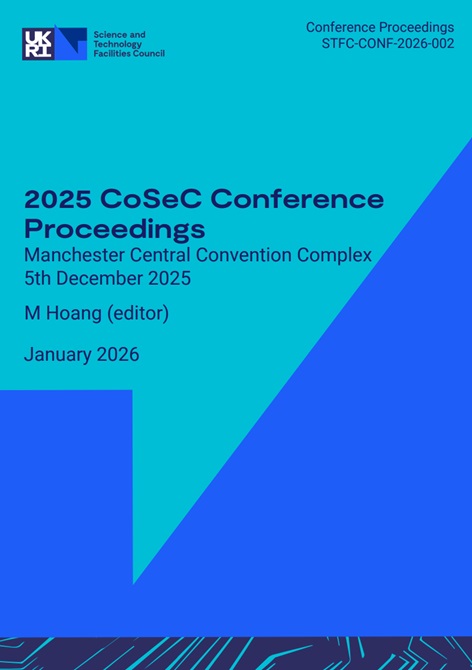
The conference, now in its fifth year, promoted the research and achievements of the CoSeC communities for the past year. Collaborators presented on a range of subjects and we were delighted to introduce our second cohort of CoSeC Fellows.
This conference reflects the achievements of the past year and the body of research that addresses the increasingly complex scientific computing challenges that we face today. Over the last five years of the CoSeC Conference being included within CIUK, we have seen a continual increasing in quantity and quality of submissions, as well as the diversity in topics. The conference provides a key moment in the UK calendar for computational research communities to come together and discuss collaboration and areas where they cross-cut. This year’s event was the biggest, most successful to date and a great indicator for the future of collaborative community-driven research within the UK.
This year the key themes included; Modelling, Simulation & Reconstruction; Scientific Reproducibility; Data Stewardship and to exploit the new hardware Accelerated Computing.
Cross cutting principles presented included how to exploit current HPC facilities available to the CoSeC communities, as well as emerging and next-generation national facilities considering governance and data management; and then key technical issues surrounding the future of a sustainable research computing.
“The ability to just wait for computation power to increase is tempting”, says Conference Chair, Dr Martin Turner, University of Manchester. “But the CoSeC communities have shown the advantages to strive “now” to consider how to best use current and exploit future computational abilities. Software development both technically and governance need to continue to evolve at a similar rate to hardware progress.”