Over the last week I have been in Hamburg, Germany for the ISC Conference. The theme this year was “Connecting the dots – HPC, AI, Quantum: Powering Innovation and Sustainability“.
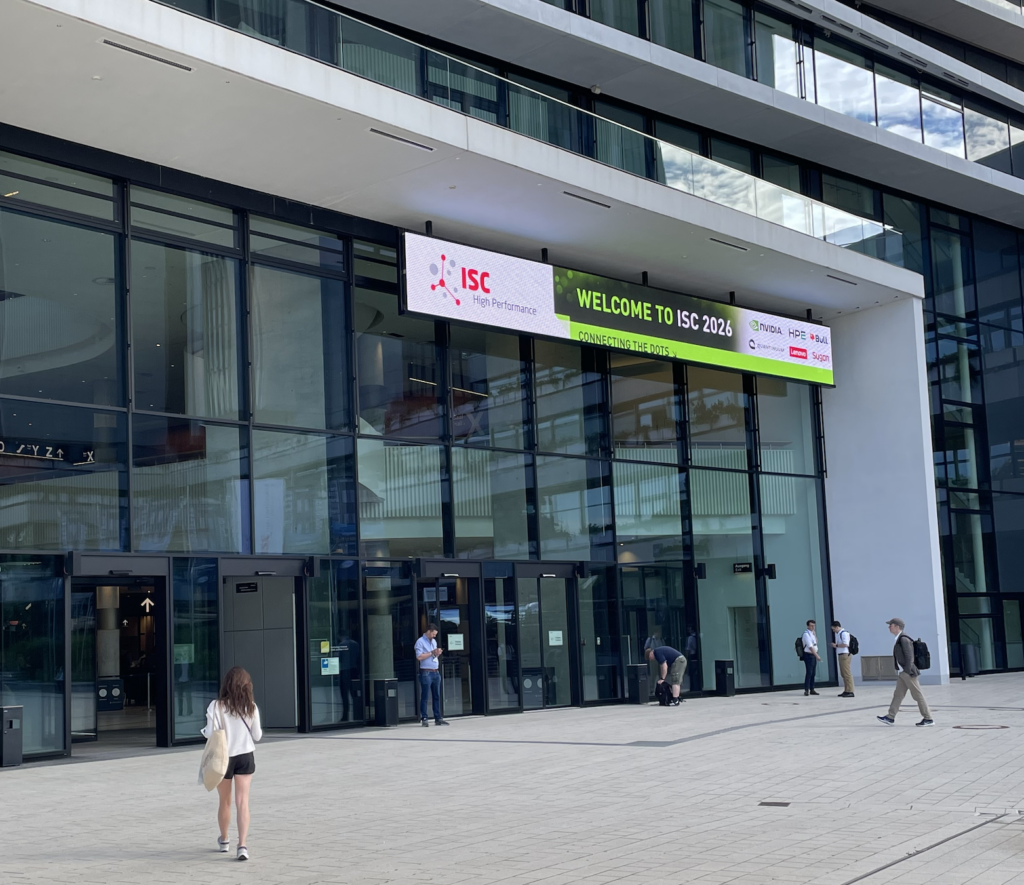
ISC is a conference that connects scientists, engineers, and technology leaders to explore the future of high performance computing. ISC26 included sessions that examined today’s breakthroughs in artificial intelligence, high performance computing and quantum technologies, as well as looking at what lies ahead. A major sub-theme of the conference – that fits really well with the aims of CoSeC – is sustainability, promoting energy-efficient and cost-effective computing.
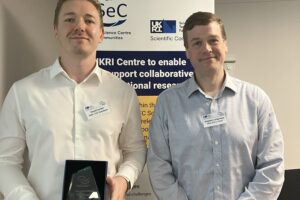
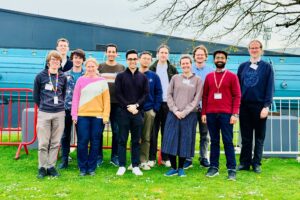
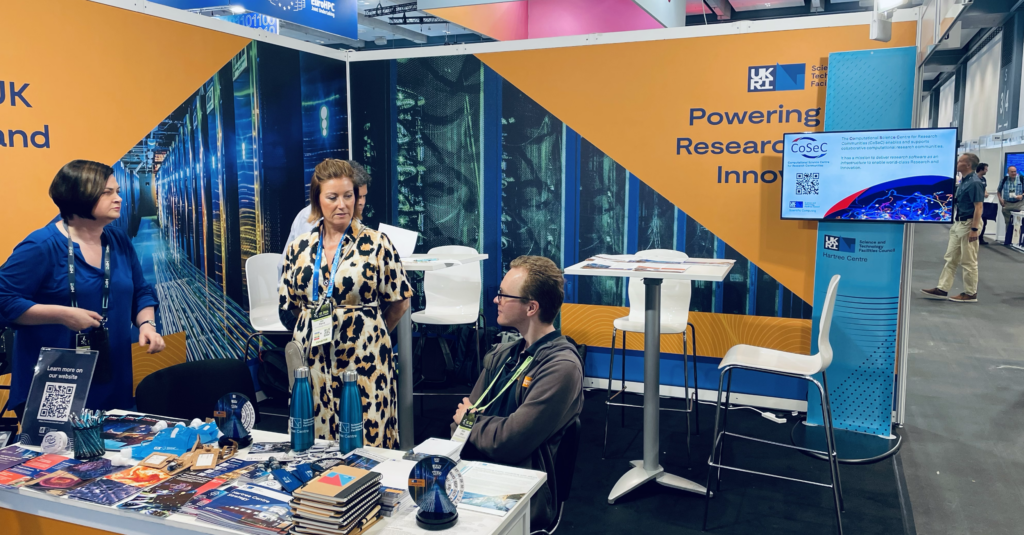
STFC had a major presence at the conference with representatives this year from Scientific Computing, the National Quantum Computing Centre, and the Hartree Centre, all coming together to represent the organisation, with a stand in the exhibition allowing a focal point for information sharing and informal meetings and discussions. My week was a good mix of conversations on the stand, meetings with colleagues around the exhibition hall, and attending a selection of presentations from the main programme.
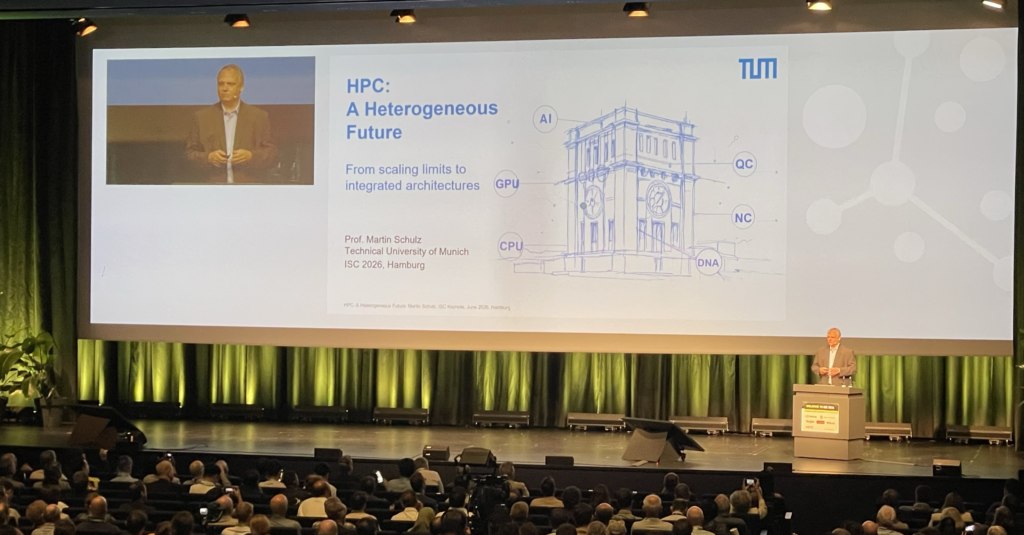
The opening keynote presentation was a highlight of day one with Martin Schulz from TU Munich presenting on “HPC, a heterogeneous future“. The presentation began with a brief description of what the speaker felt was the current state, with HPC as a strategic infrastructure, and AI shifting the centre of gravity. The focus of the presentation was around the fact that no single accelerator covers it all and that we are moving towards a portfolio of compute, rather than a single accelerator, with AI, quantum, CPUs and GPUs, and neuromorphic computing coming to the fore. The presentation conclusions where especially relevant for CoSeC as they identified that “integrated hardware will lead to integrated software” and that there is a need for sustainable software solutions, where HPC Centres like CoSeC will play an important role because they can create sustainable environments for software development and maintenance.
Other sessions that I joined on day one included the annual Top 500 awards, a session organised by PRACE about their scientific and innovation case for HPC in Europe, and a birds of a feather session organised by the Hartree Centre about effective communication with our communities. The day ended with the official opening reception on the exhibition floor where I was able to catch up with quite a few colleagues from UK universities.
Day two was more relaxed with time spent around the exhibition hall and the STFC stand. I did attend a presentation on “Quantum computing as a service” and also enjoyed the session that introduced the latest Green 500 list – another topic that fits well with CoSeC’s work around energy efficient computing.
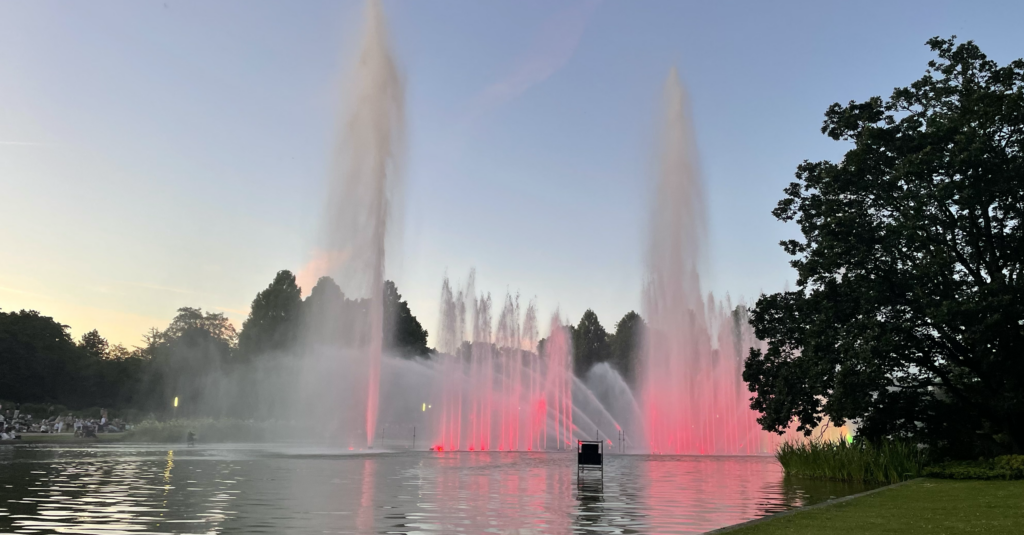
The week wasn’t all work and the team did get to spend some free time around Hamburg and around the huge park that the conference centre is situated in. We were able to enjoy an afternoon outdoor concert by the Hamburg Police Orchestra plus a spectacular evening sound and light show on the park lake.
Overall, a great week with a brilliant team of people and lots of interesting chats, discussions and presentations. Hopefully ISC27 can be an event on CoSeC’s calendar for next year!