Author: Irufan Ahmed
Affiliation: Imperial College London
Contact: irufan.ahmed04@imperial.ac.uk
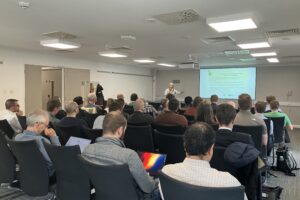
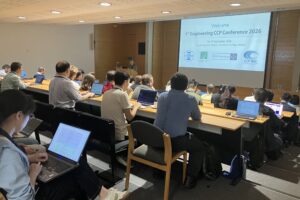
From 4 to 8 May 2026, I attended the Sustainable Conference for Responsible Research Computing (SC4RC) at CERN in Geneva, Switzerland. The event brought together a diverse group of attendees, ranging from technical professionals and software engineers like myself to researchers from the social sciences. This mix felt particularly timely as we confront the environmental impact of our digital infrastructure – a challenge becoming increasingly urgent with the rapid expansion of AI and large language models.
The venue provided a remarkable backdrop for these discussions. It was fascinating to hear physicists at CERN describe the computing and data storage challenges inherent in high-energy particle physics, particularly during a tour of their data centre, which currently manages over one exabyte of data. I also had the opportunity to speak with data storage experts about the data growth needs of our department. While our requirements at Imperial are several orders of magnitude smaller, it was reassuring to see that the technical strategies we are implementing align with practices used at the highest levels of data management.
The keynote speeches added important context to the challenges of sustainable computing. Julia Steinberger discussed the Planetary Boundaries framework, which defines nine environmental limits within which humanity can safely operate. As of 2026, seven of these boundaries have been breached, placing Earth’s systems in a high-risk zone. She also highlighted work by Narasimha Rao suggesting that a good quality of life for the global population by 2050 could be achieved with only 40% of current energy use – provided we adopt highly efficient and practical technologies of the kind discussed throughout the conference.
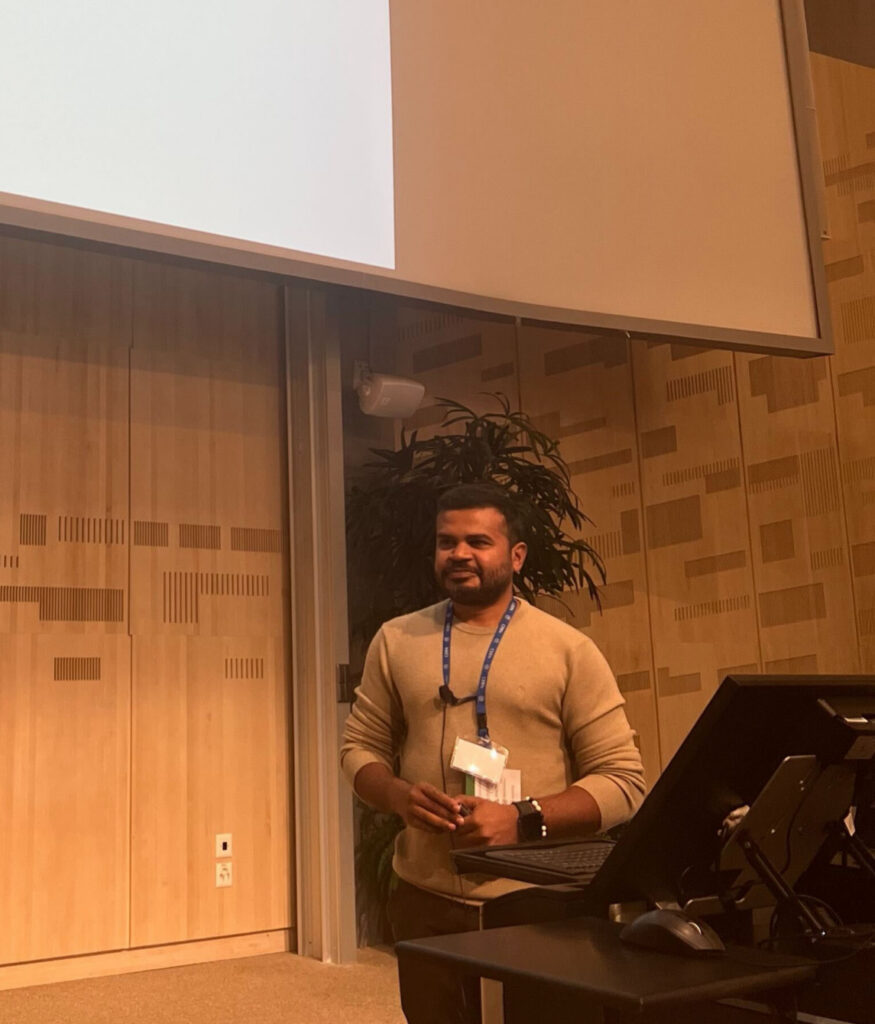
I contributed a talk on the data repository we are developing in the Department of Aeronautics at Imperial. My presentation focused on how a university department can manage its data within a constrained budget, with an emphasis on the sustainability of our storage infrastructure. By using a Ceph cluster, we can scale with commodity hardware, offering a more sustainable and cost-effective approach to long-term data growth. The subsequent Q&A raised useful questions around policy, including long-term data retention and the management of cold data.
The week also provided valuable opportunities for discussion with researchers and engineers across disciplines who are working towards more sustainable approaches to computation. I came away with a clearer understanding of both the technical and systemic challenges involved. Just as importantly, the conversations reinforced that many of the problems we face are shared – and that practical, incremental improvements in how we store and manage data can meaningfully contribute to reducing our overall impact.